
Now taking design partners
Small legal practices
Non-litigation work — conveyancing, wills and estates, small commercial. The profession where the most is already built.
The job we would time first
One inbound document, end to end
Every design partner times the same shape of job, varying only the profession. That is deliberate: it tests whether the mechanism saves time independently of industry, which is a more useful thing to learn than two data points in one profession.
- Contract review and clause risk
- Client correspondence
- Matter document summaries
- Engagement and retainer drafting
- File note capture
- A contract or client document arrives
- Someone reads it for the clauses that matter
- Details that should not be sent are taken out by hand
- A summary or reply is drafted
- A solicitor approves it before it goes
- The matter file gets updated, or does not
How it lands here
What this looks like in your practice
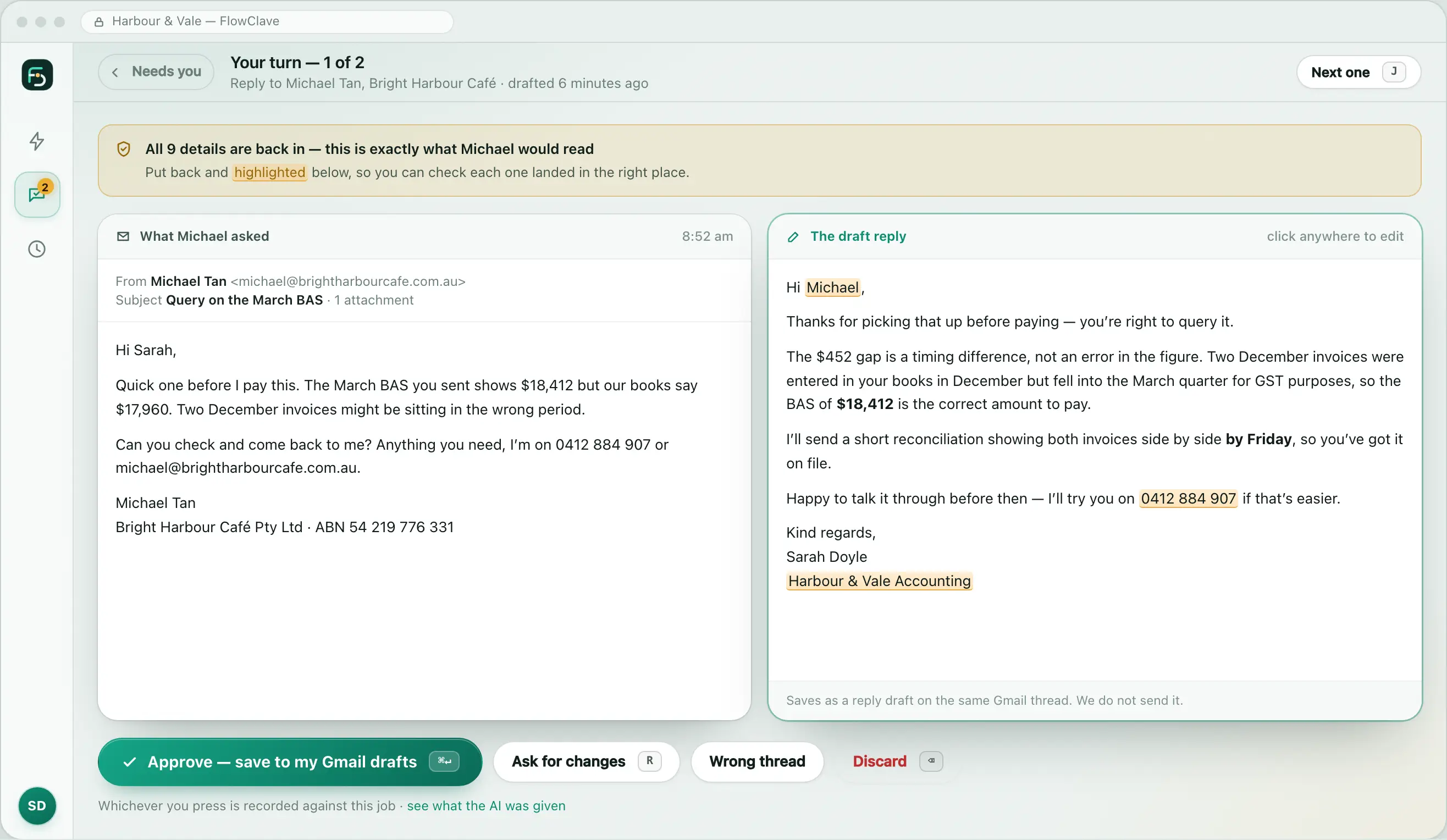
Contract intake, clause extraction, a risk summary, and a solicitor approving the result before it goes anywhere — with the approval step declared in the workflow rather than left to whoever happens to be driving.
This is the profession where the most is already built: two legal workflow packages ship, and the contract-risk path was designed around a solicitor's sign-off from the start.
Court-facing work is out of scope. Australian courts have their own rules about generative AI in affidavits, witness statements and expert reports, and this is not the tool for that. We stay on the non-litigation side of the line.
In your regulator's words
What has already been said about this
Quoted from the published documents, with dates and links. We have not summarised them for you, and none of this is us telling you what your obligations are.
any placing of client confidential information into a publicly available generative AI system is akin to putting it in the public domain. This is likely to be a breach of confidentiality and clients may lose privilege.
Implementing clear, risk-based policies to minimise data and security breaches, and set out what AI tools they have decided to use in their practice, who can use those tools, for what purposes, and with what information.
consider maintaining records of each generative AI output for discovery and retention purposes.
One job, defined once
Bring one job your practice repeats
Thirty minutes, no software shown, and a one-page write-up of that job whether or not you take it further.